
At a glance
The Physician Assistant program at RWU is currently being developed. Enrollment is expected to be available for the 2027–2028 winter semester. The application period is expected to run from early May through July 15, 2027.
Termine
Alle Termine
Close to people. Close to medicine.
In the Physician Assistant program, you’ll learn how to perform medical examinations, assist with diagnostic and therapeutic procedures, and professionally support physicians in providing modern, patient-centered care.
The Physician Assistance program combines medical expertise with hands-on training and interprofessional collaboration. You’ll learn to competently perform delegable medical tasks and make an important contribution to modern, patient-centered healthcare.
How to Study Physician Assistance at RWU
- Practical degree program with extensive hands-on placements and simulation training
- Learning in a modern skills lab with realistic case scenarios
- Interprofessional learning alongside students from other disciplines in the social and health care professions
- Close alignment with the requirements of the German healthcare system
- Small study groups and direct contact with professors and staff
- Actively shaping the healthcare of tomorrow
Here's what to expect during your studies
The healthcare sector is changing, and the demand for qualified professionals is growing. At RWU, you’ll pursue a practical, scientifically grounded education that always keeps in mind the challenges of tomorrow’s healthcare system—especially in the Lake Constance-Upper Swabia region.
Hands-On Experience from the Start
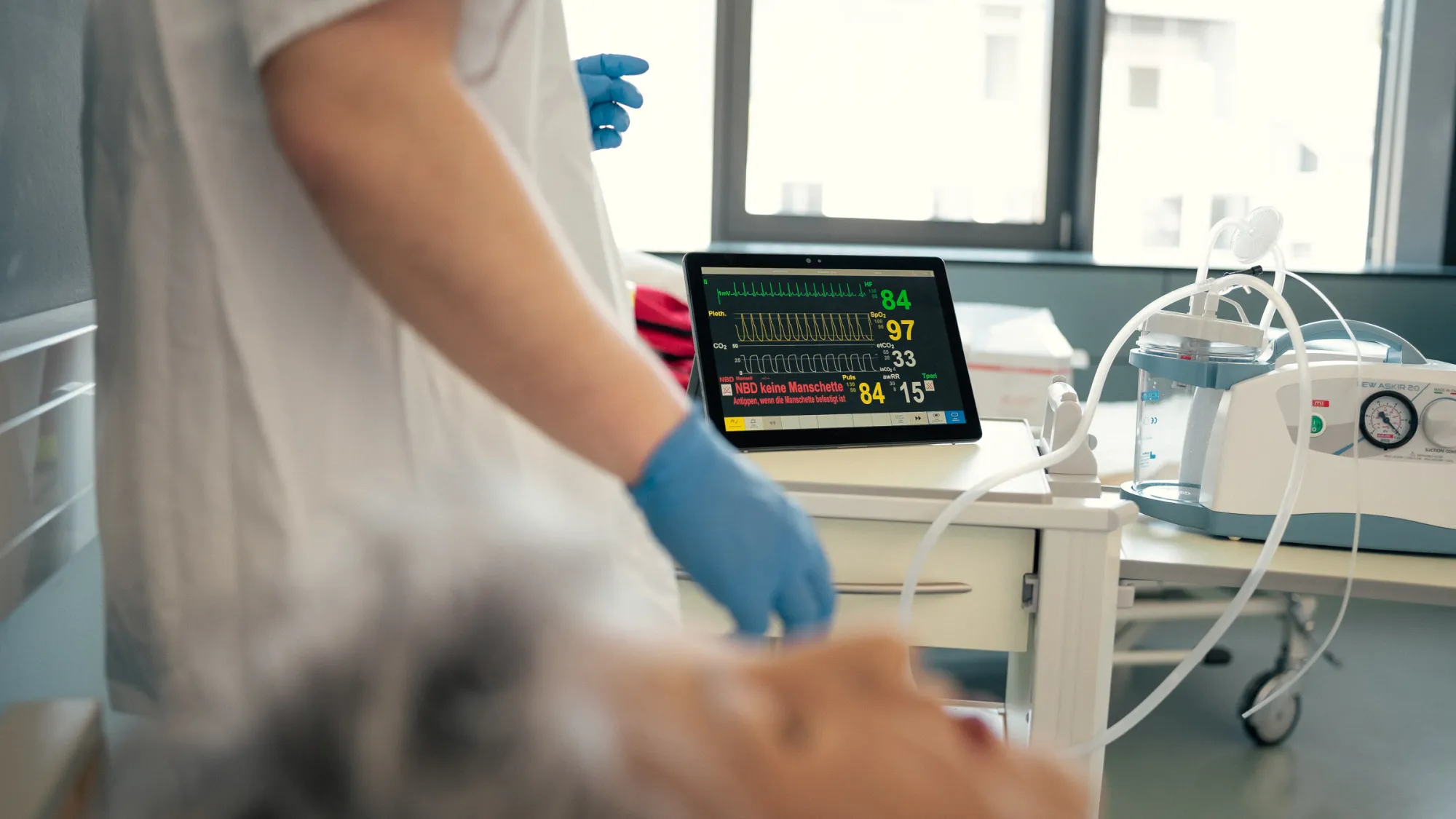
In the Skills Lab, you’ll practice medical skills in a realistic learning environment. Here, you’ll practice examination techniques, emergency situations, and clinical procedures before applying your knowledge during your clinical rotation at outpatient and inpatient healthcare facilities. In the future, digital simulations and VR applications will complement this hands-on learning.
Working Together as a Team
High-quality medical care is the result of collaboration. That’s why, even during your studies, you’ll learn alongside students from other social and health care programs. This helps you develop the skills you’ll need later in interprofessional teams.
Science and Practice
You combine medical expertise with evidence-based medicine and learn to critically evaluate scientific findings and apply them in practice. This enables you to competently support and actively shape medical decision-making and care processes.
Is the Physician Assistant program right for you?
The demands on the healthcare system are constantly growing. Doctors need qualified support to continue providing the best possible care to patients in the future. This is exactly where Physician Assistance comes in.
This program is right for you if you…
- are curious about medicine and health.
- enjoy taking on responsibility.
- work carefully and in an organized manner.
- are open with people and enjoy communicating.
- value teamwork.
- want to contribute to the advancement of modern healthcare professions.
Postgraduate courses

Social and Health Care Management
Curriculum
Comprehensive and in-depth knowledge
During your studies, you’ll gain in-depth knowledge of medicine, diagnostics, and patient care. This includes, among other things:
- Anatomy, physiology, and pathophysiology
- Pharmacology and emergency medicine
- Clinical examinations and medical history
- Diagnostics and therapy
- Communication with patients and their families
- Ethics, Law, and Quality Management
Scientific Research and Evidence-Based Medicine
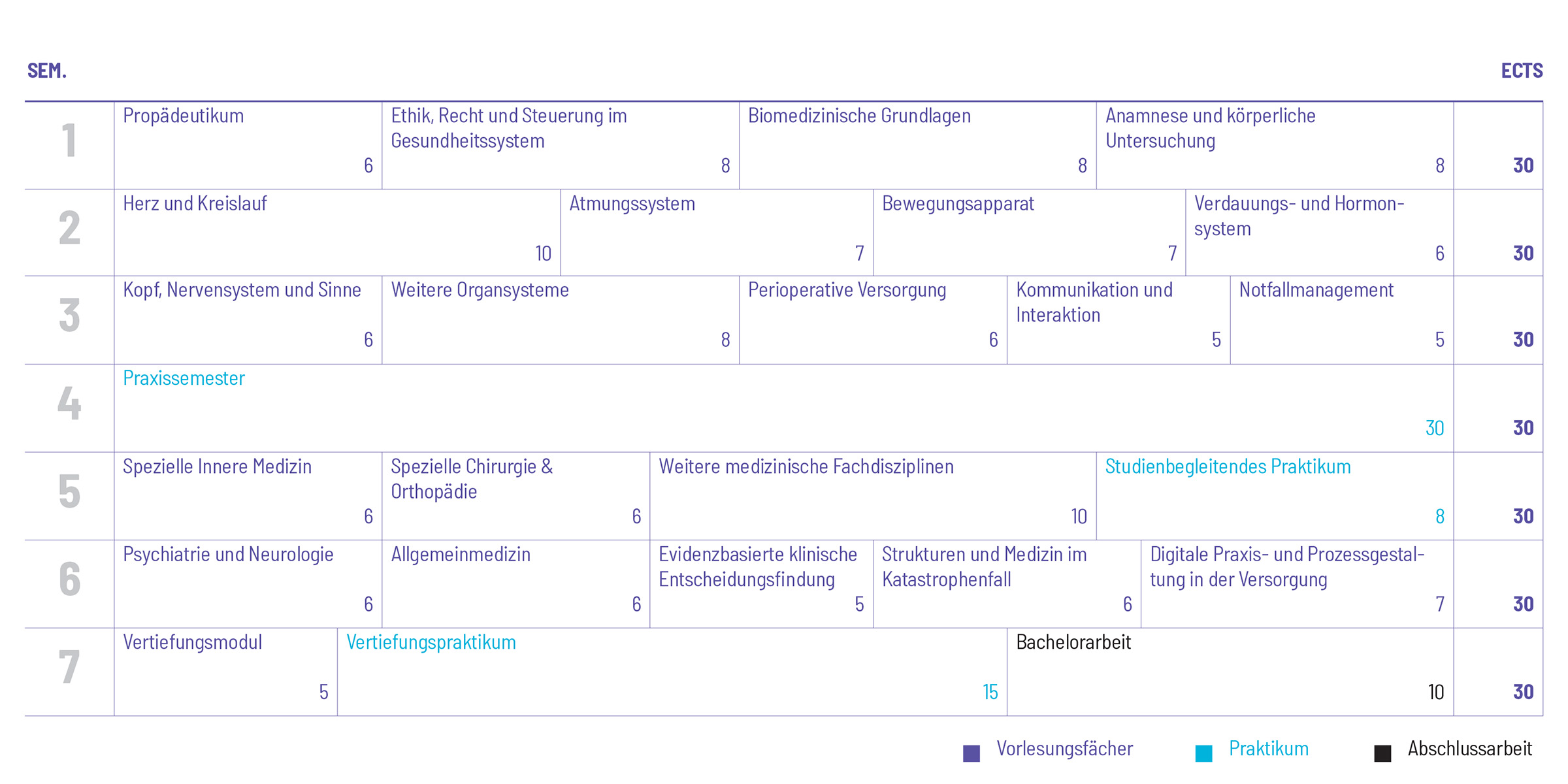
1ST SEMESTER
- Introductory Course (PA Onboarding, Methods of Scientific Research)
- Ethics, Law, and Governance in the Healthcare System
- Fundamentals of Biomedicine (Fundamentals of the Human Body, Fundamentals of Hygiene, Introduction to Laboratory Practice)
- Medical History and Physical Examination
2nd SEMESTER
- Heart and Circulatory System (including Introductory Course on Organ Systems)
- Respiratory System
- Musculoskeletal System
- Digestive and Endocrine Systems
3rd SEMESTER
- Head, Nervous System, and Senses
- Other Organ Systems (Skin and Immune System, Urogenital Tract)
- Perioperative Care (Anesthesia, Surgical Techniques)
- Communication and Interaction Within the Healthcare Team (Communication and Interviewing Skills, Interdisciplinary Collaboration, and Professional Practice)
- Emergency Management (Emergency Medicine, Self-Care, and Stress Prevention in Emergencies)
4TH SEMESTER
- Clinical rotation at a suitable institution providing inpatient or outpatient medical care
5TH SEMESTER
- Specialized Internal Medicine
- Specialized Surgery and Orthopedics
- Other medical specialties (pediatrics, geriatrics, gynecology, urology)
- Internship Concurrent with Studies
6th SEMESTER
- Psychiatry and Neurology
- General Medicine
- Evidence-Based Clinical Decision-Making (Medical Statistics, Evidence-Based Medicine)
- Healthcare Systems and Medicine in Disaster Situations (Crisis Management and Disaster Medicine)
- Digital Practice and Process Design in Healthcare (Healthcare Economics, Quality and Process Management, Digital Health)
7TH SEMESTER
- Specialization Module (Acute Somatic Care; Primary Care; Psychiatric and Psychotherapeutic Care)
- Specialization Internship
- Bachelor’s Thesis
Admission
APPLICATION FOR THE WINTER SEMESTER
The program offers 33 spots per year and is only offered in the winter semester.
The application portal opens in May, and the application deadline is July 15.
Current information on the application process.
Click here to access the application portal (applications accepted starting in May)
SELECTION PROCESS – HOW IS THE OVERALL GRADE CALCULATED?
Applicants with the highest overall grades will be admitted to the program. The overall grade is determined based on the application materials and the Admission and Selection Regulations for Bachelor’s degree programs at RWU.
This overall grade can be improved by having one or more of the following qualifications:
- Completed vocational training in the field of health and social services
- One year of professional experience in the field of the vocational training program
- Recognized extracurricular achievements, practical activities, and prior experience (e.g., FSJ, volunteer work, parental leave)
WAITLIST PROCEDURE
Prospective students often apply to multiple colleges and degree programs. As a result, study spots regularly become available again because an applicant decides to accept a spot in another program. These newly available spots are allocated through the waitlist process to those who were not initially accepted. Places are again allocated according to the ranking list, meaning they go first to those with the highest overall grade.
You can find more information about the application process and the allocation of study spots here and at the Admissions Office.
SEMESTER TUITION
Every semester, all students are required to pay a semester fee upon registration or re-enrollment. This fee is charged at a similar rate by all universities in Germany.
FEES FOR INTERNATIONAL STUDENTS AND FOR A SECOND DEGREE
In Baden-Württemberg, a tuition fee for international students (non-EU citizens) and a second-degree tuition fee have been in effect since the 2017/2018 winter semester. Consequently, in some cases, a tuition fee must be paid in addition to the semester fee.
Before enrollment, applicants from non-EU countries or applicants seeking to pursue a second degree will receive a form to determine whether they are actually required to pay tuition.
You can find the amounts and detailed information at Finances.
Career Prospects & Practical Experience

Your Career Prospects as a Physician Assistant
As a Physician Assistant, you’ll be in demand in many areas of the healthcare sector. After completing your degree, you can work in places such as:
- Family practice offices
- Hospitals
- Psychiatric facilities
- Medical care centers
- Specialist practices
- Rehabilitation clinics
Through continuing education, professional development, and specializations, you can specifically expand your career prospects. You also have the option of pursuing consecutive master’s degree programs. At RWU, you can continue your studies with the master’s program in Social and Health Care Management.
Physician Assistance in the Emergency Department
Emily and Johannes talk about their jobs as physician assistants in the emergency room and what motivated them to pursue this degree program.
Their duties include:
- Taking a medical history and performing a physical examination to assess the patient’s symptoms
- Diagnostic procedures as delegated by physicians, e.g., ultrasound
- Planning further treatment in collaboration with physicians
- Documenting the measures taken
- Organizational tasks related to the discharge or transfer of patients
Physician Assistance in a Family Practice
Paula and Lisa talk about their work as physician assistants in a family practice, the responsibilities they handle, and what motivated them to choose this field of study.
Their duties include:
- Infectious disease clinic
- Emergency consultations
- Video consultations
- Ultrasound