At a glance
Through digital engineering, you will learn how to develop intelligent devices or robots and how they are manufactured and networked using modern technology and software.
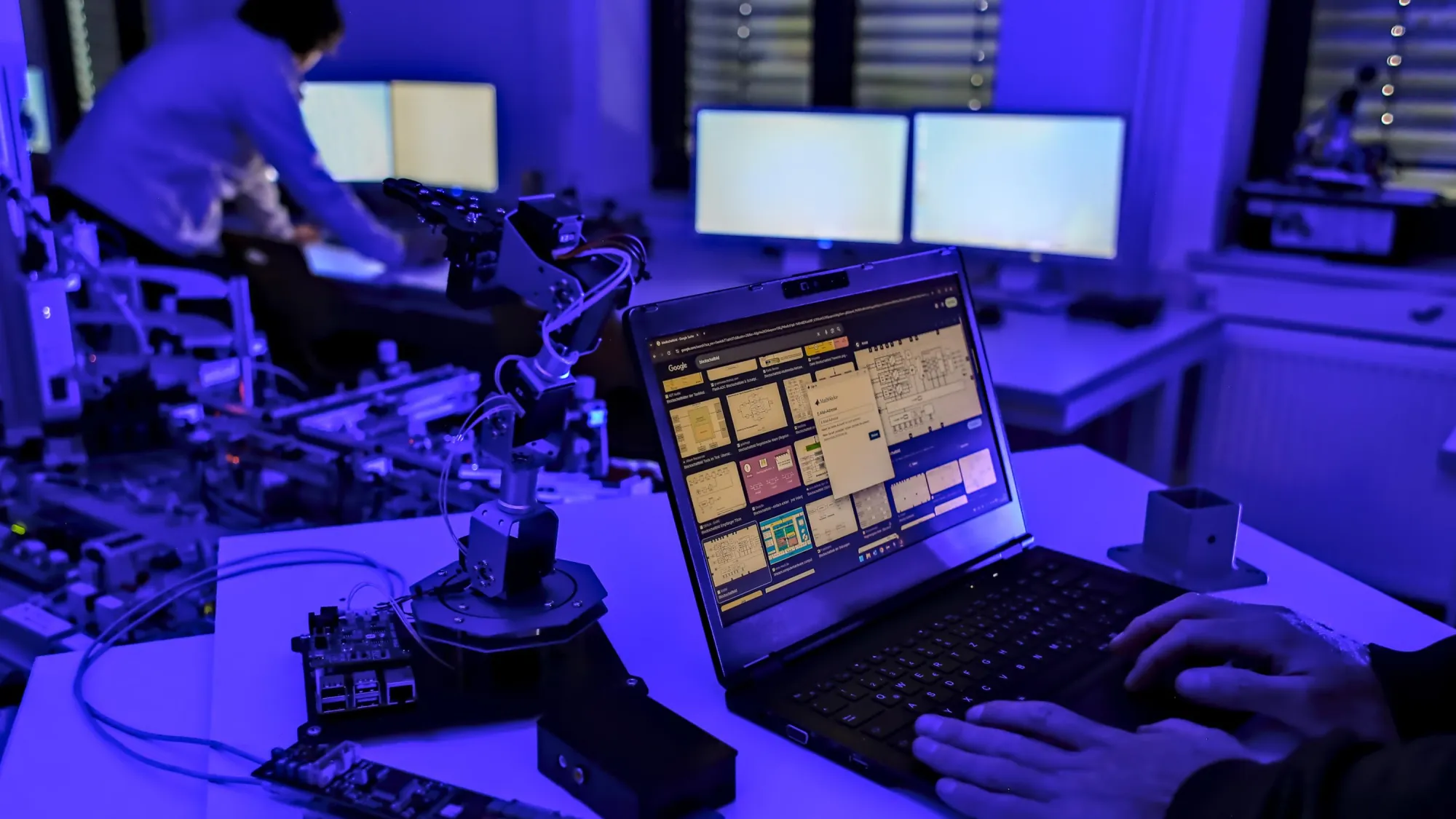
Understand and shape the digitally networked world of tomorrow!
Digital Engineering - Smart Products and Manufacturing combines computer science, engineering and modern production technologies to develop and implement intelligent products and digitally networked manufacturing systems.
The course at a glance:
- Interdisciplinary: natural sciences, engineering and computer science
- High practical component: in the laboratory, during a practical semester and in freely selectable project modules
- Cooperation with industrial partners in the region
- Holistic approach: from development to production to the final product
- Direct contact and individual support from professors, tutors and employees in small groups
- Support in challenging subjects through tutorials and supervised practice groups
Verstehe und forme die digital-vernetzte Welt von morgen!
Digital Engineering – Smart Products and Manufacturing verbindet Informatik, Ingenieurwesen und moderne Produktionstechnologien, um intelligente Produkte und digital vernetzte Fertigungssysteme zu entwickeln und umzusetzen.
Der Studiengang auf einen Blick:
- Interdisziplinär: Naturwissenschaft, Technik und Informatik
- Hoher Praxisanteil: Im Labor, im Praxissemester und bei frei wählbaren Projektmodulen
- Kooperation mit Industriepartner*innen der Region
- Ganzheitlicher Ansatz: Von Entwicklung über Fertigung bis hin zum finalen Produkt
- Direkter Kontakt und individuelle Betreuung durch Professor*innen, Tutor*innen und Mitarbeitende in kleinen Gruppen
- Unterstützung in herausfordernden Fächern durch Tutorien und begleitete Übungsgruppen
Why digital engineering?
Mastering tomorrow's challenges today! Products are becoming smart: connected devices with AI, sensors and software are shaping today's and tomorrow's industry. Factories are becoming intelligent: IoT, Industry 4.0 and data analysis are important disciplines in the world of work. The Digital Engineering degree program provides you with the skills for this.
Is the course right for you?
- You enjoy technology and computer science - you like tinkering with hardware and programming.
- You want to be in demand with top employers in the region.
- You are interested in smart products such as networked devices, robots or digital factories.
- You like interdisciplinary projects in which mechanics, software and production interact.
- You want to learn hands-on in modern laboratories, with real applications and in team and project work.
Study differently
Projects instead of stiff cramming: you can convert one or more modules of the curriculum into projects each semester.
Doing instead of writing: In your final thesis, you develop a Bachelor's project with short documentation instead of a long text paper.
Exklusives Stipendium
Studium finanzieren, Praxiserfahrung sammeln und Karrierechancen sichern: Die Firma RAFI GmbH & Co. KG bietet den RWU-Studierenden aus dem Studiengang Digital Engineering die Möglichkeit zu einem Stipendium an. Das Stipendium verbindet eine monatliche Förderung mit spannenden Praxiseinsätzen in einem führenden Industrieunternehmen. So profitieren Studierende von optimalen Voraussetzungen für einen erfolgreichen Start ins Berufsleben.
Downloads
- §53 der Studien- und Prüfungsordnung für die Bachelorstudiengänge - Fassung vom 21. Mai 2026
- Studien- und Prüfungsordnung für die Bachelorstudiengänge mit Allgemeinem Teil - Diese Änderungssatzung tritt zum WiSe26/27 in Kraft
- Erstes Modulhandbuch für den neuen Studiengang an der RWU
- Satzung der Hochschule Ravensburg-Weingarten über die Regelungen zum Hochschulzulassungs- und auswahlverfahren für Bachelorstudiengänge vom 26. März 2026
Postgraduate courses

Mechatronics (EN)

Technology Management and Optimization

Product Development in Mechanical Engineering
Curriculum
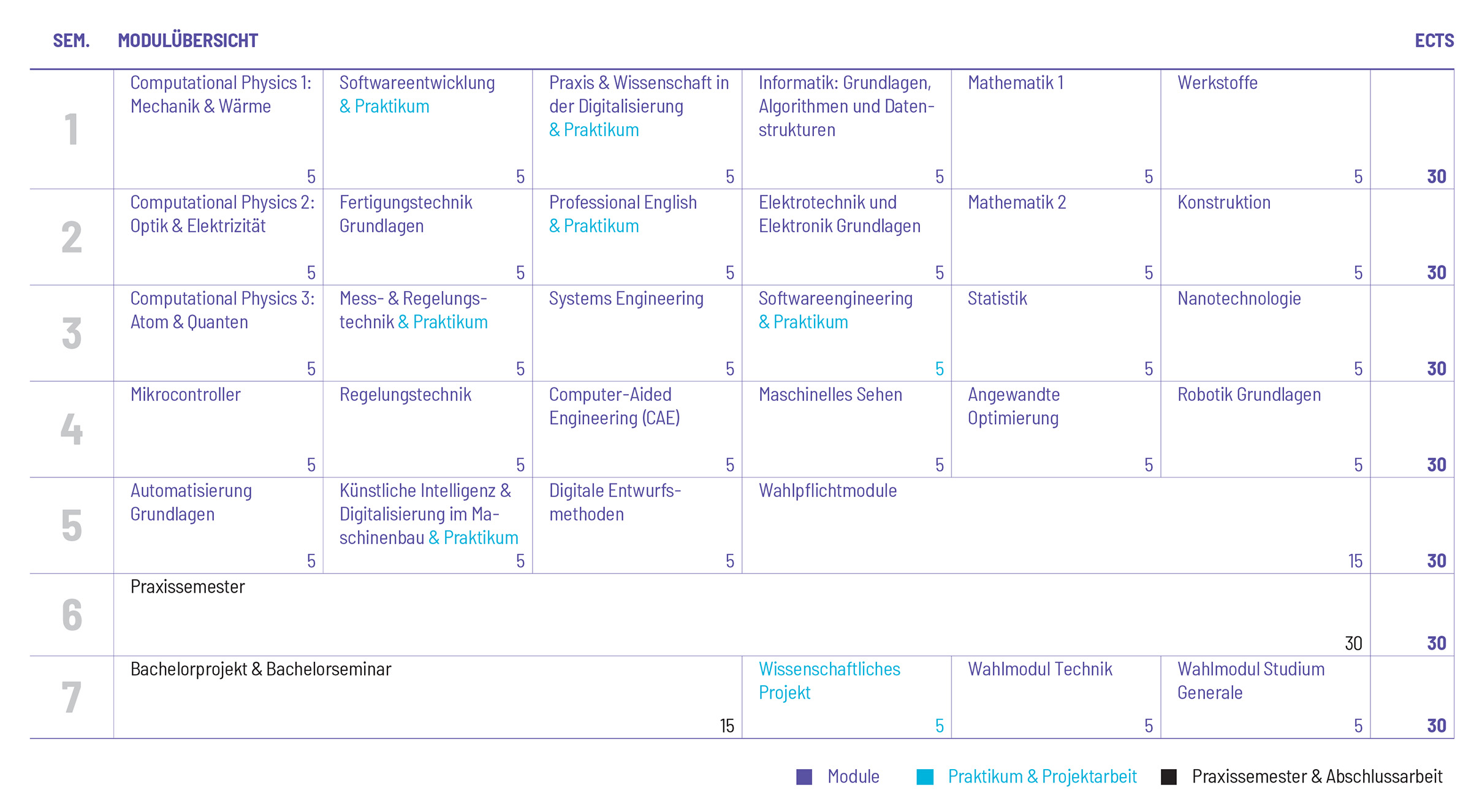
What can you expect during your studies?
Basics
You start with the scientific and technical foundation you need for the digital engineering profession. Mathematics, physics and materials science provide you with the analytical and scientific basics. In computer science and software development, you will learn to understand algorithms and write your own programs. This is supplemented by electrical engineering, production engineering and design - the basis for every technical system. In the practice and science of digitalization, you will learn project-oriented and scientific thinking and working.
Digital Engineering & Smart Products
Now it's time to get hands-on: you will design smart products and learn the language of sensors, software and hardware. Topics such as microcontrollers, measurement and control technology and software engineering will show you how smart devices work. In systems engineering and CAE methods, you will learn how to plan and model complex systems. Statistics, nanotechnology and applied optimization will give you an insight into the world of data-driven product development.
Smart Manufacturing
Everything here revolves around the intelligent factory of the future - from automation to AI. You will immerse yourself in robotics, automation technology and digital design methods. Machine vision and artificial intelligence in mechanical engineering show you how data and algorithms improve production processes. Elective subjects such as Smart Sensors, Applied AI or Production & Sustainability allow you to focus on areas of interest.
Specializations & projects
In the final stage of your studies, you will apply your knowledge in a practical, creative and research-oriented way. In the practical semester, you will work directly in a company and gain valuable professional experience. In the scientific project and elective modules, you will deepen your interests - from technical applications to sustainability or management. Your Bachelor's project concludes with a presentation and seminar - your ticket to the world of digital engineering.
What skills will you take with you?
At the end of your studies, you will be able to
- model, simulate and develop mechatronic systems,
- combine software, sensors and hardware to create intelligent products,
- analyze data and use it to optimize processes
- design automated and networked production systems,
- apply AI methods in practice,
- manage and communicate complex projects in an interdisciplinary manner.
News
News related to this content

Videos on College and Career Exploration
New RWU Videos as “Study Snacks”
During the summer semester, RWU produced four program trailers in the “Study Snack” format. The videos provide prospective students with a concise overview of selected degree programs and help them navigate their academic choices.

Economics Championships
RWU Team Takes Third Place at Student Festival
In early June, a team from the Technology & Management Student Council traveled to Geiselwind for this year’s WiWi Championships. In addition to the festival atmosphere and new connections, there was no shortage of athletic achievements.

Press release
New degree program at RWU: Digital Engineering
RWU will soon be offering a new bachelor's degree program. Digital Engineering combines computer science, engineering, and modern production technologies.
Career prospects & practice
Industries with a future
Your knowledge is in demand in many sectors: mechanical engineering, the automotive industry, medical technology, robotics, logistics, energy, AI start-ups and industrial IT providers. Companies in the Lake Constance-Upper Swabia region in particular are specifically looking for specialists who can combine technical systems with digital solutions.
Practical experience during your studies
- You will work on real technical tasks in laboratories and projects.
- During the practical semester, you gain valuable experience in industrial companies - often the door opener for your Bachelor's thesis and career entry.
- In the scientific project, you will train your ability to work on complex topics in an interdisciplinary way - from the idea to the digital twin to the prototype.
Your career prospects
Digital engineers are in demand across all industries - wherever products are networked, processes are automated and data is used intelligently.
Typical fields of activity are
- Development of smart products - from networked sensor devices to intelligent machines and vehicles
- Planning, simulation and optimization of automated production systems
- Data analysis and digitalization of industrial processes
- System integration and interface management between mechanics, software and production
- Project management and technical consulting in digitalization projects
FAQs
Here you will find frequently asked questions about the degree program. If you have any further questions, please contact the head of degree program, Prof. Dr. Samuel Vogel. If you have any questions about admission, please contact the Admissions Office.
Differences to computer science, mechanical engineering & industrial engineering
Math & previous knowledge
Workload & job alongside your studies?
Contact & People
General contact details
| Opening hours | By arrangement |
|---|---|
| Phone | |
| Room | B 213 |
| On campus |
Building B
Leibnizstr. 12
88250 Weingarten |
| Postal address |
RWU Hochschule Ravensburg-Weingarten University of Applied Sciences Digital Engineering - Smart Products & Manufacturing P.O. Box 30 22
88216 Weingarten Germany |
Dean of Studies & Student Advisor

Secretariat
Professors









Practice office
Admissions office

Examination office